

The bumpy forehead hack that works overnight (no I'm not bullsh*tting you)

In Summer 2024 I suddenly started getting little tiny forehead bumps that would not go away no matter what I did. As someone with an alarmingly smooth forehead (and no, no botox), I was confused why all my regular tricks weren’t working (regular tricks being a retinoid daily + Dr Sam’s neutralising gel for nasty random pimples).
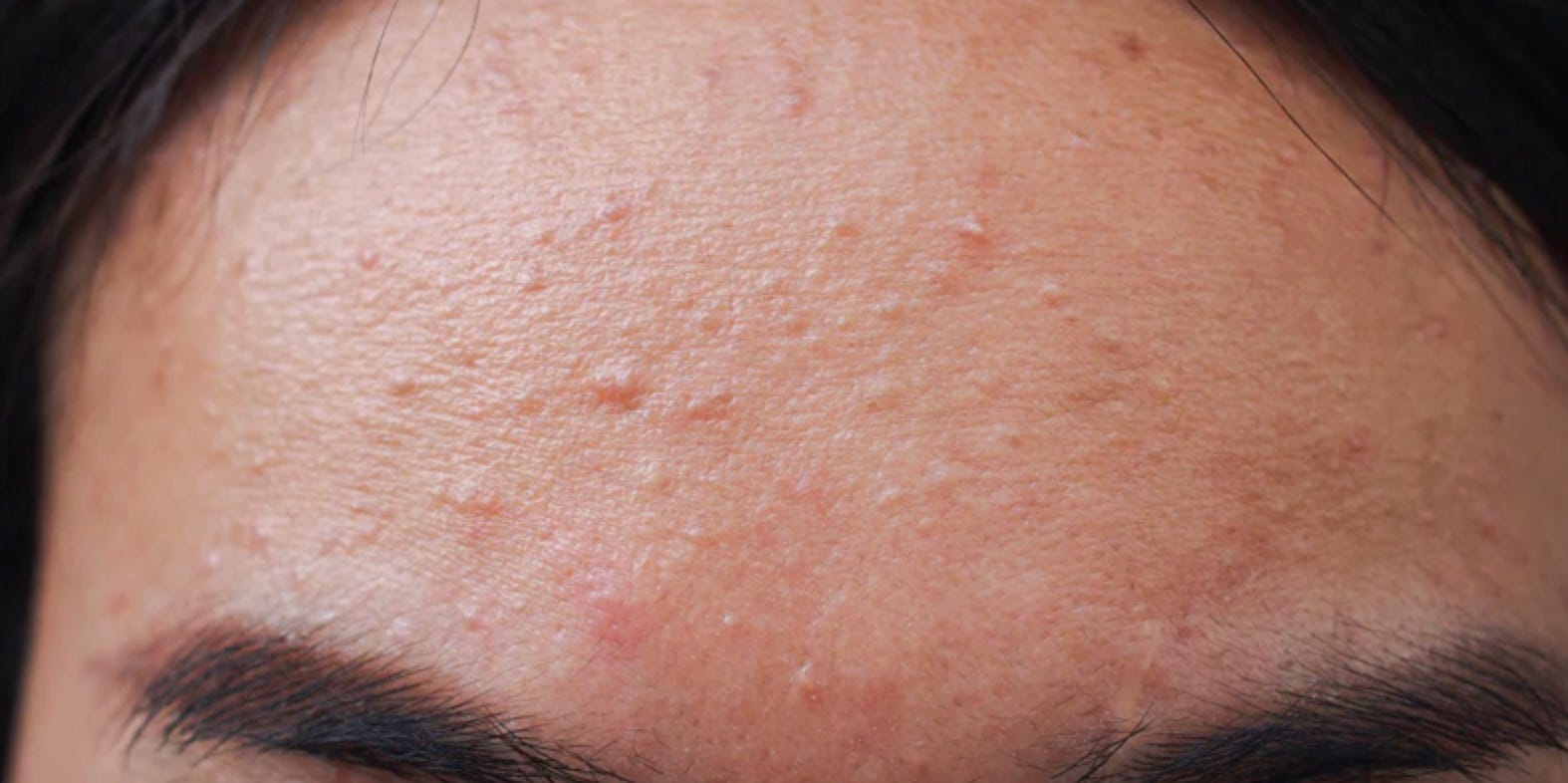
I quickly started to notice a pattern: the bumps would be worse on super hot, sweaty days, and immediately get better when the weather got cooler. If the UK weather hit a rough patch and suddenly rained for a week, the bumps completely vanished and my smooth forehead returned. After a while, my suspicion was confirmed: it wasn’t clogged pores, it was fungal acne.
Wtf is fungal acne?
Fungal acne isn’t actually a real type of acne, which is why a lot of dermatologists hate the name - but I still call it fungal acne because it’s easier to understand. The correct term is ‘malassezia folliculitis’, meaning inflammation of the pore due to malassezia.
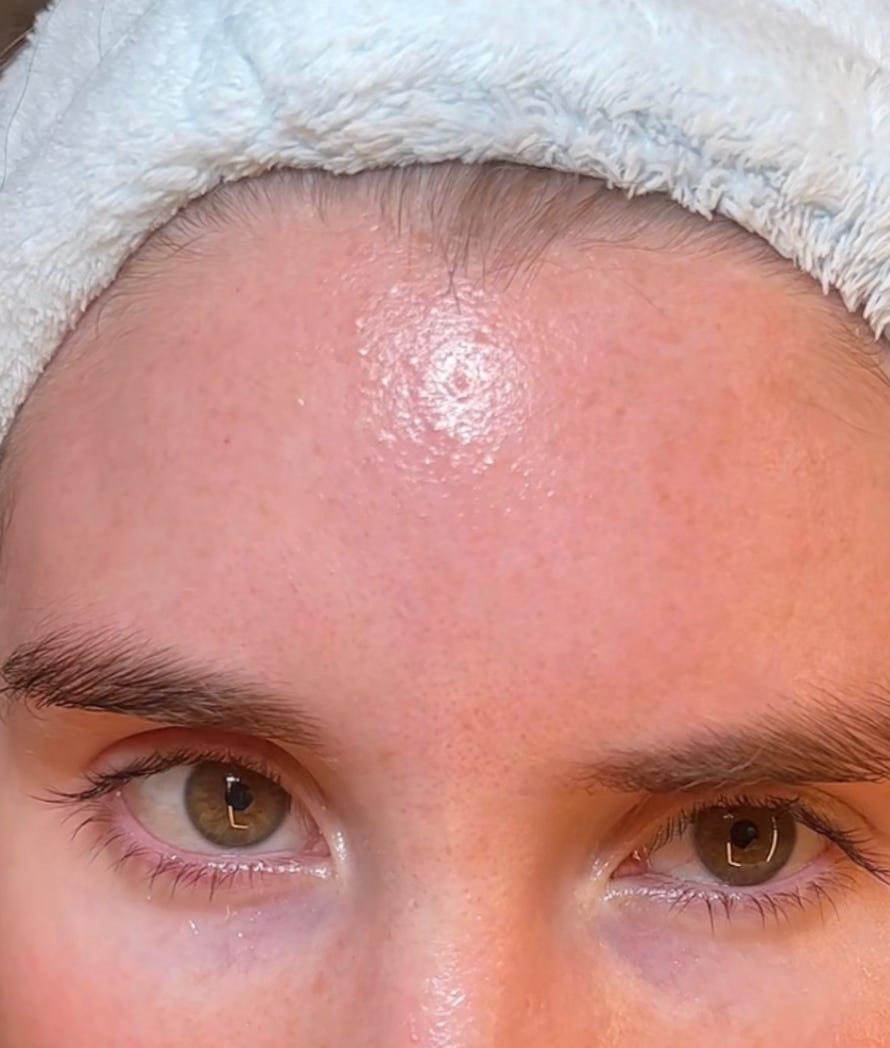
Malassezia is a yeast that lives on our skin normally, but with fungal acne the yeast overgrows. It’s a bit like thrush or athlete’s foot - delicious. Dandruff and seb derm are actually also caused by yeast that lives on our scalp. Honestly, once you start getting into skincare, you start to realise that yeast seems to be behind everything that can go wrong with skin.
Damp and humid environments (think sweaty UK summer in London) are the perfect breeding ground for the yeast, which then irritate the pore, causing little bumps that become whiteheads.
For me, the triggers are very clearly:
humidity
sweat
heat
anything that makes my forehead stay damp or occluded
Products can be a trigger for some people, but for me it’s always the weather. This is why so many people struggle in the UK summer, or after super sweaty gym sessions.
You might notice that you’re ok on holiday, though, because UV kills yeast and the heat is typically drier (depending on where you are).
The problem with most fungal acne advice
A lot of the advice around fungal acne is either too vague or too harsh.
People will tell you to use less moisturiser, try hypochlorous acid, or strip your routine right back. And yes, that might help a bit depending on your triggers, but none of those things directly address the problem.
If fungal acne is the issue, you need an antifungal active ingredient.
Nizoral isn’t the solution
The antifungal everyone talks about is Nizoral shampoo. It contains ketoconazole, which is an antifungal, and yes, it does work. If you lather it up and use it almost like a mask on the forehead, it can help.
The problem is that it’s insanely drying and simply not effective enough, especially if your triggers are happening daily (or for an entire season).
It’s just not sustainable to use daily if fungal acne is a regular problem for you. If you’ve got a one-off flare, fine. But if your environment keeps triggering it, I just don’t think this is a good long-term solution.
It works, but it’s miserable.
The product that solves the whole problem for me
The thing that ended up working best is the Clever Soap Piroctone Olamine Cream.

The reason I began using it is because I wanted something that:
Had an antifungal in it (like piroctone olamine)
Could stay on the skin, not be washed off after a few minutes
Wasn’t in a thick cream or ointment base (I didn’t want heavy ingredients that would clog my pores)
That last one really mattered to me because my forehead breaks out very easily from heavy products. A lot of antifungal creams are just too thick for me to even consider putting on that area, like Clotrimazole.
This one is basically a simple gel with piroctone olamine. It also has niacinamide in it, which I know not everyone loves, but the formula overall is very minimal.
That’s what made it so much more appealing to me than the usual options, and I’m so glad I tried it because my whole problem is fixed now. No issues at all anymore, no redness, itching, bumpiness. I feel safe with it in my routine - and no, this isn’t sponsored and I bought it with my own money.
How I use it in my routine
After cleansing, I dry my skin and use a tiny amount, spread very thinly over my forehead. That’s it.
I do it first thing in the morning, before any other skincare, and then again in the evening after cleansing.
The main thing is that it needs to be the first thing touching the skin. I wouldn’t sandwich it between loads of other products, you don’t know how they’re going to inerract. You also don’t need loads of it. A thin even layer is enough.
Why it works better than anything else
The biggest difference for me between this and Nizoral is that it’s leave-on.
This way, it has much longer contact with the skin than something like Nizoral, which you rinse off. And because the texture is light, it doesn’t make me feel like I’m swapping fungal acne for closed comedones.
That was always my fear with antifungal creams. Even if they killed the yeast, I didn’t want them clogging my forehead in the process. This doesn’t do that for me.
It also doesn’t seem to damage my skin barrier the way Nizoral can. It just quietly does its job and I can’t feel it on my skin at all.
Why it can work overnight
Fungal acne tends to respond fairly quickly once you find the right treatment.
If you’ve had the fungal acne for a while, it probably won’t work overnight, but it usually does show some improvement in just one night.
That might look like:
smoother skin
fewer new bumps
less irritation
less texture overall
That’s what I noticed with this.
If your fungal acne is mild, it can actually go away completely overnight.
It didn’t make me immune to heat and humidity, but it made me feel so much less anxious about them. Before, if I knew I was going somewhere hot or sweaty, I’d already be dreading what my forehead would look like later. Now I feel like I actually have something that keeps it under control.
What about the terbinafine spray?
Last year I also talked about a terbinafine hydrochloride spray from Superdrug.
I still think that works, but I think this works better.
The spray helped, but this feels more effective and more practical. I think piroctone olamine just works better for my skin than terbinafine did, and the gel texture makes more sense for daily use on the face.
How to know if you have fungal acne vs clogged pores
This is the part I think is really important. If neither this nor Nizoral makes any difference in a week, I honestly don’t think you have fungal acne, you probably have regular old closed comedones instead.
That matters, because the treatment is completely different. Closed comedones respond better to retinoids. They don’t respond to antifungals the way fungal acne does, because they’re not caused by yeast in the first place.
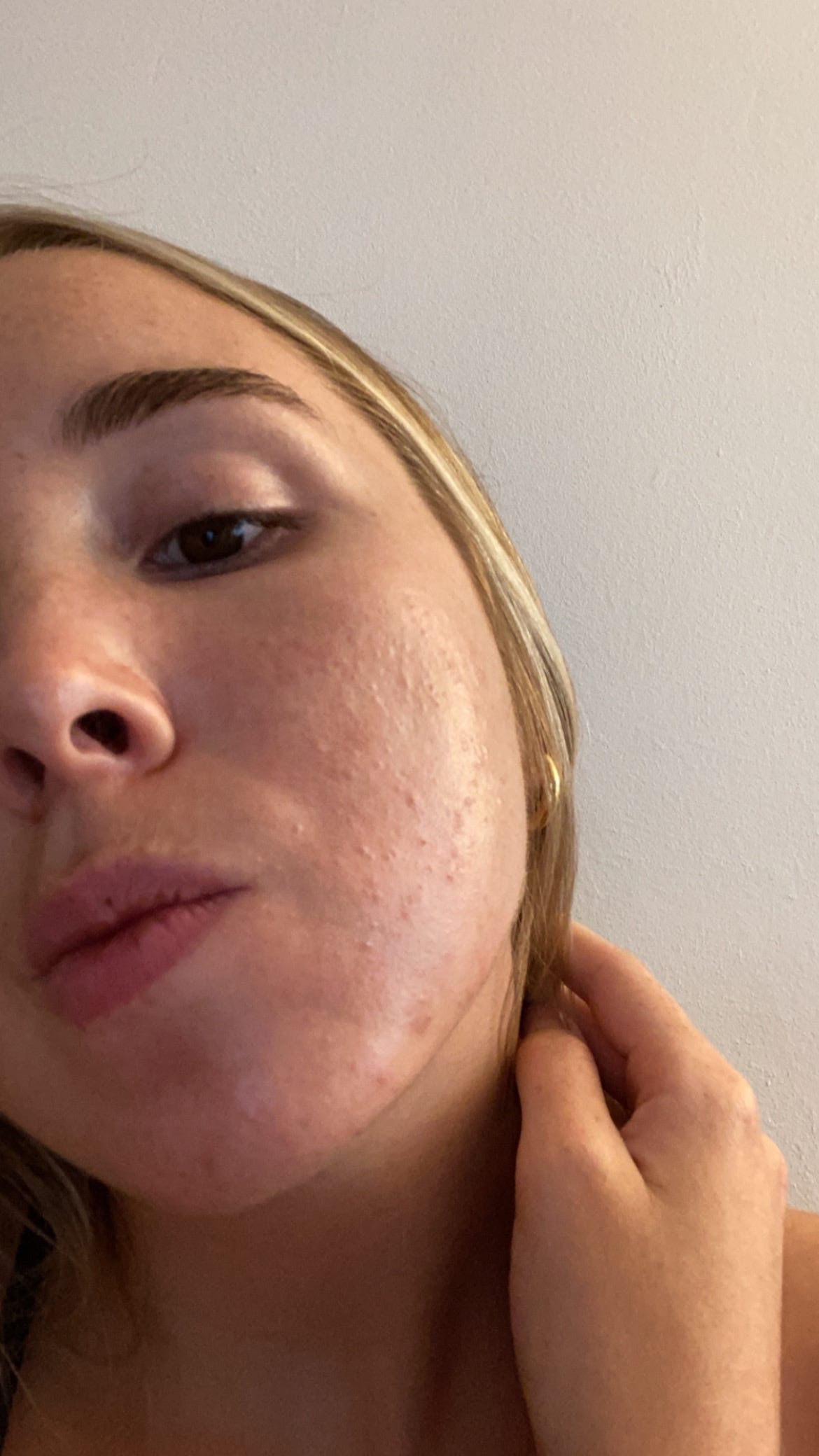
And I say that as someone who is incredibly prone to closed comedones and has spent a ridiculous amount of time figuring out the difference.
I post much longer, detailed skincare content on YouTube so be sure to subscribe if you like that kind of content.
Also, you might like my hack for sebaceous filaments - which are the things that everyone confuses for blackheads but are actually completely different.
Natalie x
Sorry for a potentially dumb question but the last image of yourself, is that fungal acne you're showing or closed comedones?