

How to grow on Substack from 0

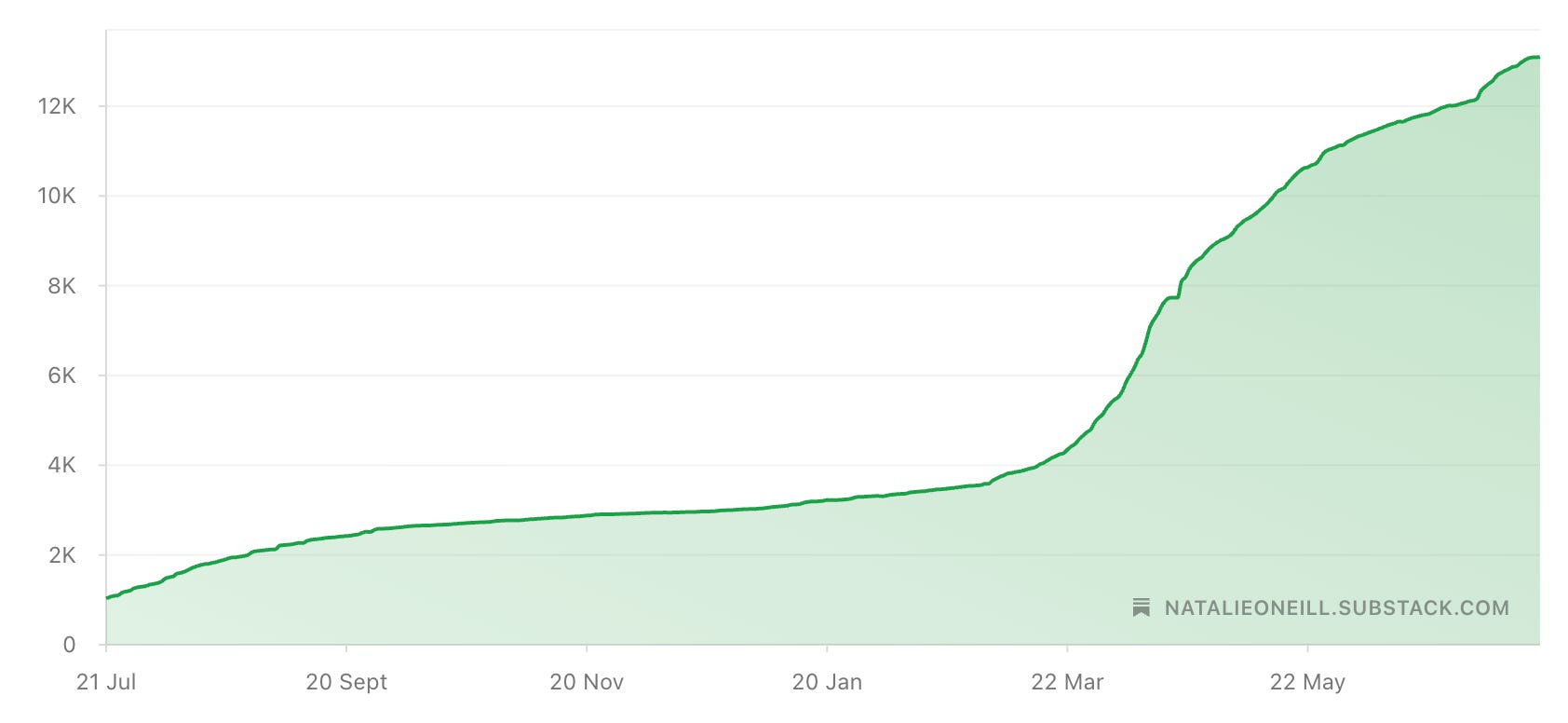
I joined Substack in July 2025 with 0 subscribers.
A year later, I have 13,000.
Last week, I was even invited to speak about Substack at CreatorFest.

You might think that’s purely because I have an audience on other platforms, but all my growth came in the last three months.
Something finally clicked.
And since I have a no-gatekeeping policy, I’m going to share everything I wish I had known when I first joined a year ago.
Let’s get into it.
01 Understand the mechanism
Something I’m ashamed to say I ignored for far too long is how Substack delivers content to your subscribers.
(I know, I know, if you don’t have subscribers this can feel irrelevant, but hear me out.)
Every time you write a post, Substack sends it in an email to your subscribers.
That means if you write a post every day, you’re sending an email to them every day.
This is why I am ashamed to have not realised this sooner, because I have a marketing background of 10 years, and I was still treating it like TikTok or Instagram in a way.
Yes, I was writing written content, but I was assuming that, just like those other platforms, more = more.
In reality, sending them an email more than three times a week verges on spamming them.
Unless your content is 10/10, this is risky.
Most successful Substack writers send 1-2x thoughtful posts per week.
Subscribers come to expect this from you, and it is a manageable cadence for both you and them.
Bottom line: don’t treat it like another platform.
The emails have no algorithm. Your content is sent fair and square to every single one of them.
Similarly, the content you post will probably have to be different than your other platforms. Substack users are, naturally, far more interested in reading than someone who loves 7 second clips on Instagram. But we’ll get onto that a little later.
Posts vs Notes
It took me almost the whole year I’ve been on Substack to truly understand the difference.
Posts are what you’re reading now: the longer essays that sit on your page.
Notes actually have an algorithm. They are the equivalent to a post on Instagram or a tweet on X.
Some people say you can run your Substack on notes alone.
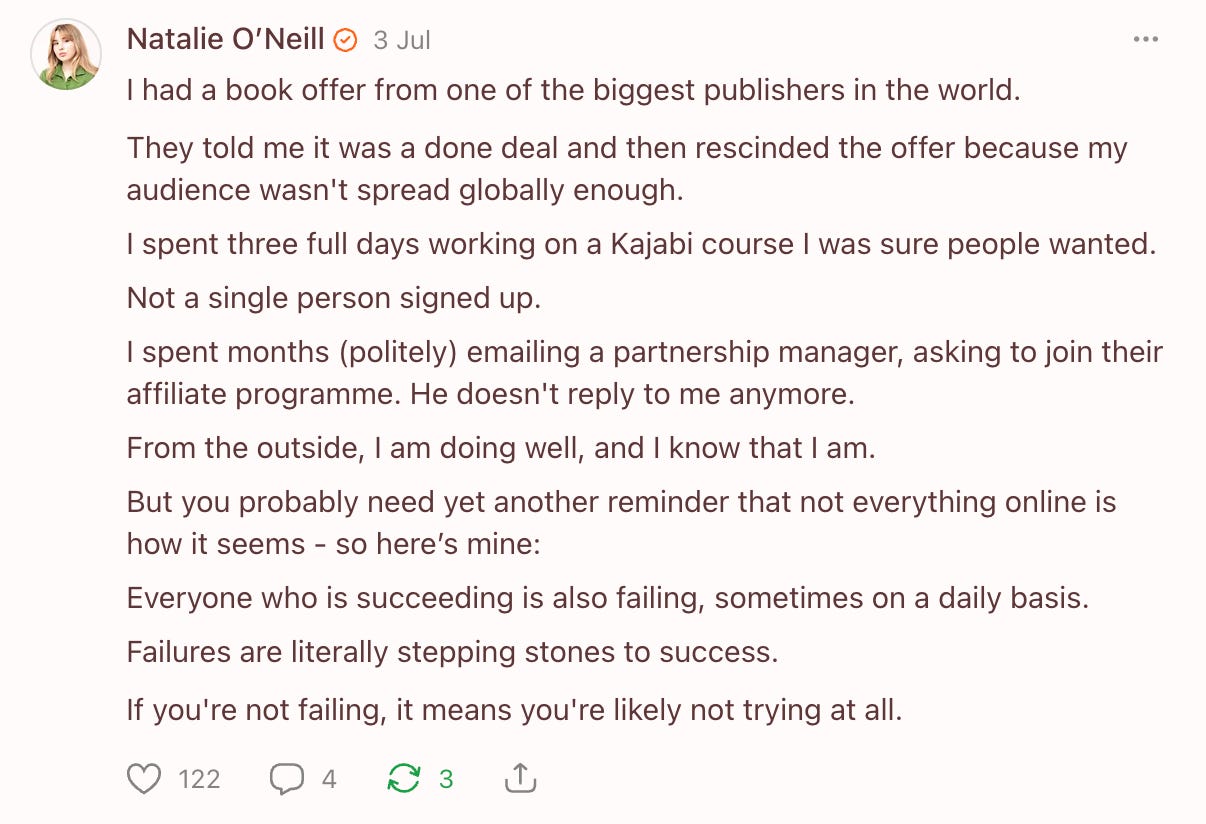
Here’s an example of one of my best performing notes:
If you write LinkedIn content, you’re probably going to automatically be better at writing notes.
If you post aesthetic pictures on Instagram, it’s probably going to take you a bit longer to get the hang of it.
Notes are a great way to drive people to your profile and longer posts.
If they like your longer posts, they’ll probably subscribe.
Notes are like the top-of-funnel ad that pushes people through the funnel to hopefully convert.
02 Schedule time to study it
This is one of the best tips I can give you.
When I started scheduling in time to understand Substack, I started to truly level up.
Each week I would schedule in a two-hour slot to simply:
Subscribe to some writers
Read some content
Engage with posts
Read about how Substack works, from Substack writers
Because this was my priority, it was reflected in my schedule. I gave it my 7.30am slot, twice a week.
You don’t have to do this forever.
It’s a temporary plan to quickly boost your understanding in a short amount of time.
I recommend doing it twice a week for one month.
Most people will make this mistake:
Feel pressured to add in yet another channel to the mix when you already feel stretched
Wait for a spare 30 minutes in the day when you’re already feeling fatigued to do anything relating to Substack
Take some of your existing content, throw it into a Substack post, and hope for the best
And that’s exactly how you reap what you sow: nothing.
I suggest doing the exact opposite if you want success.
03 Follow ONE person
Another tip I used myself that has worked wonders: pick one person to follow who posts about Substack growth.
It’s very easy for this tip to go wrong by following more than one person and getting overwhelmed.
That is why picking one (quality) person is very important.
My recommendation is Olivia Wickstrom.
Not only did I study Olivia’s posts in my allotted time slots, I even ended up purchasing an office hours slot with her.
Office hours is where she goes through your Substack and talks through any queries you might have.
My recommendation, though, is to make sure you’ve been posting consistently before you do this, or else she won’t have much to work with and it won’t be as valuable.
04 Picking your pillars
Like any platform, it’s much easier to grow on Substack when you have a niche.
Olivia encouraged me to pick 2-3 content pillars. Mine are skincare and personal finance.
In all honesty, I struggled with these for a while because it didn’t feel like they made much sense together.
People readily subscribe to personal finance advice, but skincare not so much.
When I spoke at CreatorFest last Tuesday, I admitted I still don’t have everything figured out.
I like to give my best life advice online without gatekeeping, and sometimes that doesn’t fit neatly into a pillar.
Even writing this post, I wasn’t sure if it was the right thing to do.
There are times when I find my groove with Substack, and times where I feel like I’ve completely lost it. But I’ve learned that that’s just part of the game with content creation. You only fail if you stop trying.
Nonetheless, these are my tips for picking a niche/pillars:
Pick topics your friends regularly come to you for advice on
Don’t pick topics just because they’re trendy
Pick pillars you could talk about for months, not just the flavour of the day
05 Set a cadence
This is as much for you as it is for your audience.
Not only do your followers come to expect a post every Sunday, for example, but you also know how often you need to write in your week.
I recommend not biting off more than you can chew. Start smaller, say once per week.
You can always dial it up when you get into the swing of it.
06 Give before you take
I recently wrote a post on how to make your 9-5 income from content in a year.
There’s a lot of cross over, but I recommend reading that post, too.
When you’re already running a business, it can feel like Substack isn’t worth its time if it’s not making money.
You’re probably keen to monetise as fast as possible.
As a creator with over 1m followers, I know that monetisation is important, but on Substack you have to earn trust first.
Not only trust, but you have to give before you can take.
Build a solid free subscriber base before you start paywalling posts.
Every post is a balance between reach and tangible income. Tangible income pays the bills, but a free subscriber base can be converted to paid through your weekly posts that get delivered as emails.
I took two weeks off Substack and I lost around 30 paid subscribers.
Some people only subscribe to read one post and then unsubscribe after they’ve read it.
All of this sucks, but it can be negated by consistently posting valuable content.
If you pay wall too early, you’ll cut off subscribers who would have been converted later.
It’s all a fine balance that you’ll only learn how to strike once you start consistently posting - because I know that’s the bit you’re avoiding.
Natalie x
For £6/month, you get the exact systems I’ve used to fix my skin, increase my income, and make better decisions - with detailed, brutally honest guides you won’t find anywhere else.


About the author:
Hey, I’m Natalie. I built an audience of over 1 million on TikTok talking about skincare, that quickly evolved into something much bigger here on Substack.

Now I write brutally honest, big-sister guides on skincare, finance and wellness for your 20s and 30s - breaking down what actually works so you can get ahead faster, learning from my mistakes and shortcuts.
💬 Follow on TikTok or Instagram for brutally honest skincare takes
💻 Ask me a question in the group chat
🧴Shop my recommendations here
Thank you for sharing your insights. You addressed many of my questions.
HONORED to be mentioned, and you're spot on with every single one of these strategies. The student has become the teacher ;)